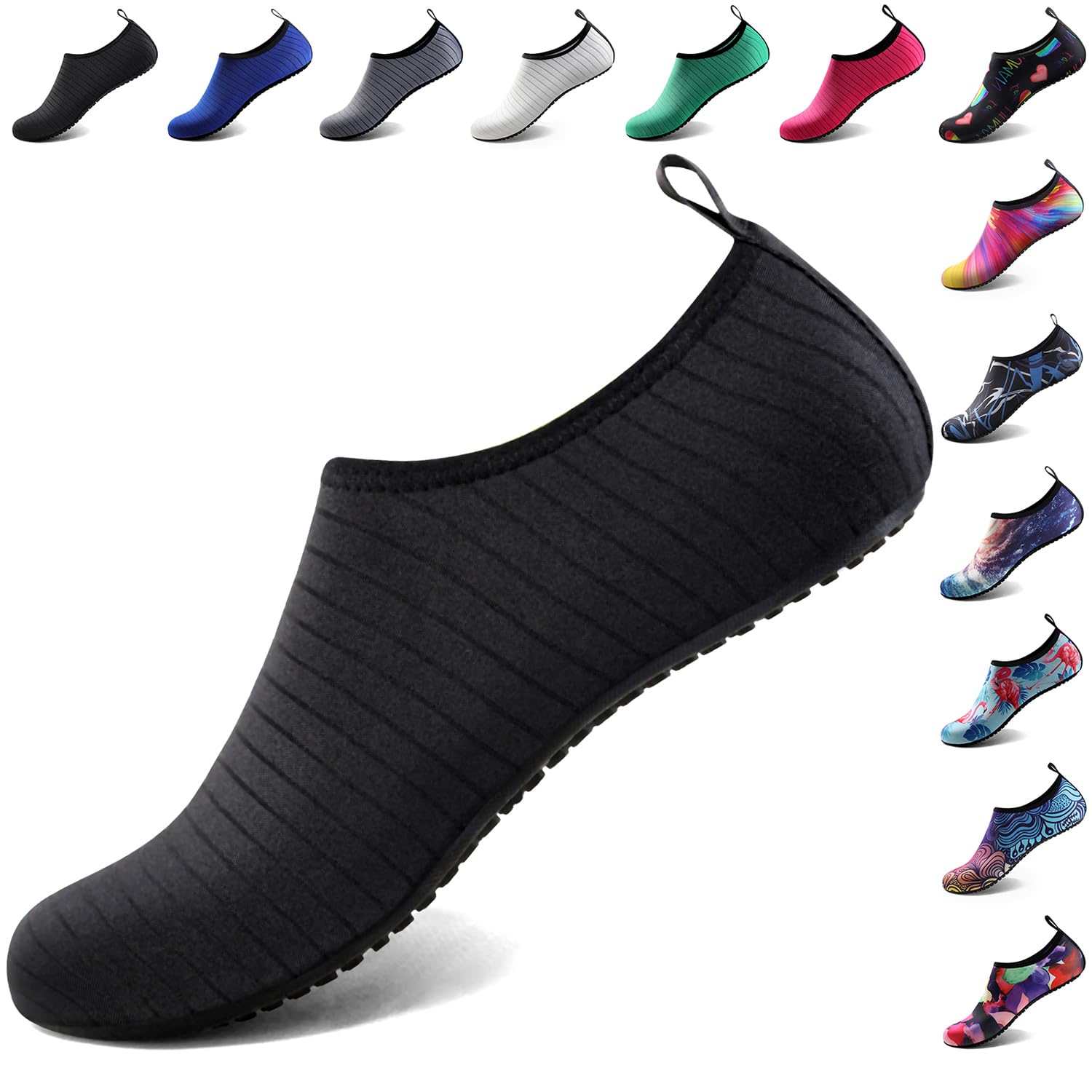
Water shoes have become a common sight at beaches, pools, and riverbanks, and the pair marketed as quick-dry aqua socks for women, men, and youth is a typical example of this category. These are lightweight, flexible shoes designed to protect your feet from hot sand, sharp rocks, and slippery surfaces while allowing for natural movement. They are often called barefoot shoes because they mimic the feel of being barefoot but with a thin, protective sole.
In real-world use, these shoes are most practical for activities where you need to transition between water and land frequently. For instance, at a lake with a rocky shoreline, they help you walk into the water without wincing at every pebble. At a public pool, they offer a barrier against rough concrete and potential foot fungi. For river hiking or kayaking, they provide grip on wet rocks and prevent cuts from hidden debris. Many people also use them for yoga or light exercise, where the flexible sole allows for foot articulation.
Key functional features include a stretchy, sock-like upper that fits snugly, a thin rubber outsole with drainage holes, and quick-drying mesh material. The upper is usually made of spandex or polyester, which dries faster than cotton but still feels damp for a while after full submersion. The outsole is typically a rubber compound with a simple tread pattern, offering decent grip on wet surfaces but not aggressive traction. The shoes are designed to be packed compactly, making them easy to toss into a beach bag or camping gear.
- Fit and comfort: The stretchy upper conforms to most foot shapes, but the fit can be inconsistent across brands. Some users find the toe box too narrow, while others appreciate the snug feel. The lack of arch support is notable—these are flat shoes, so people with high arches or plantar fasciitis may find them uncomfortable for extended walking.
- Durability: The thin sole can wear down quickly on rough terrain like gravel or asphalt. The seams may also separate after a few months of heavy use, especially if the shoes are frequently put on and taken off while wet. They are best suited for occasional use rather than daily abuse.
- Drainage and drying: The drainage holes work well to let water out, but sand and small pebbles can get trapped inside, requiring a rinse. They dry faster than closed-toe water shoes, but not instantly—expect them to be damp for an hour or two in warm, breezy conditions.
A limitation worth noting is that these shoes offer minimal insulation or protection against cold water. They are designed for warm-weather use, and in chilly rivers or early morning beach walks, your feet will feel the temperature. Also, the thin sole provides little cushioning, so walking on sharp rocks or hot sand for long periods can still be uncomfortable. They are not a replacement for sturdy hiking sandals or neoprene booties in terms of protection or thermal performance.
Compared to traditional water shoes with thicker soles and more structure, these aqua socks are more flexible and packable, but less protective. For example, a pair of Keen water sandals offers better toe protection and arch support, but they are bulkier and take longer to dry. If you prioritize portability and a barefoot feel, these are a reasonable choice. If you need robust foot protection for rocky riverbeds or long hikes, you might prefer something with a sturdier sole and more coverage.
Who is this product suitable for? It works well for casual beachgoers, pool users, yoga practitioners, and light river walkers who want basic foot protection and don’t mind a minimalist design. It is also a decent option for kids and teens who need inexpensive shoes for camp or water play. However, it is not ideal for serious hikers, people with foot conditions requiring support, or those who frequently walk on sharp or uneven terrain. The fit may also be tricky for wide feet or very high arches, as there is no adjustability beyond the stretch of the fabric.
Overall, these water shoes do what they promise: they provide a lightweight, quick-drying barrier between your feet and the ground during water-adjacent activities. They are not a high-performance piece of gear, but a practical accessory for occasional use. If you keep your expectations realistic—understanding that they are disposable after a season or two of moderate use—they can be a convenient addition to your summer kit.