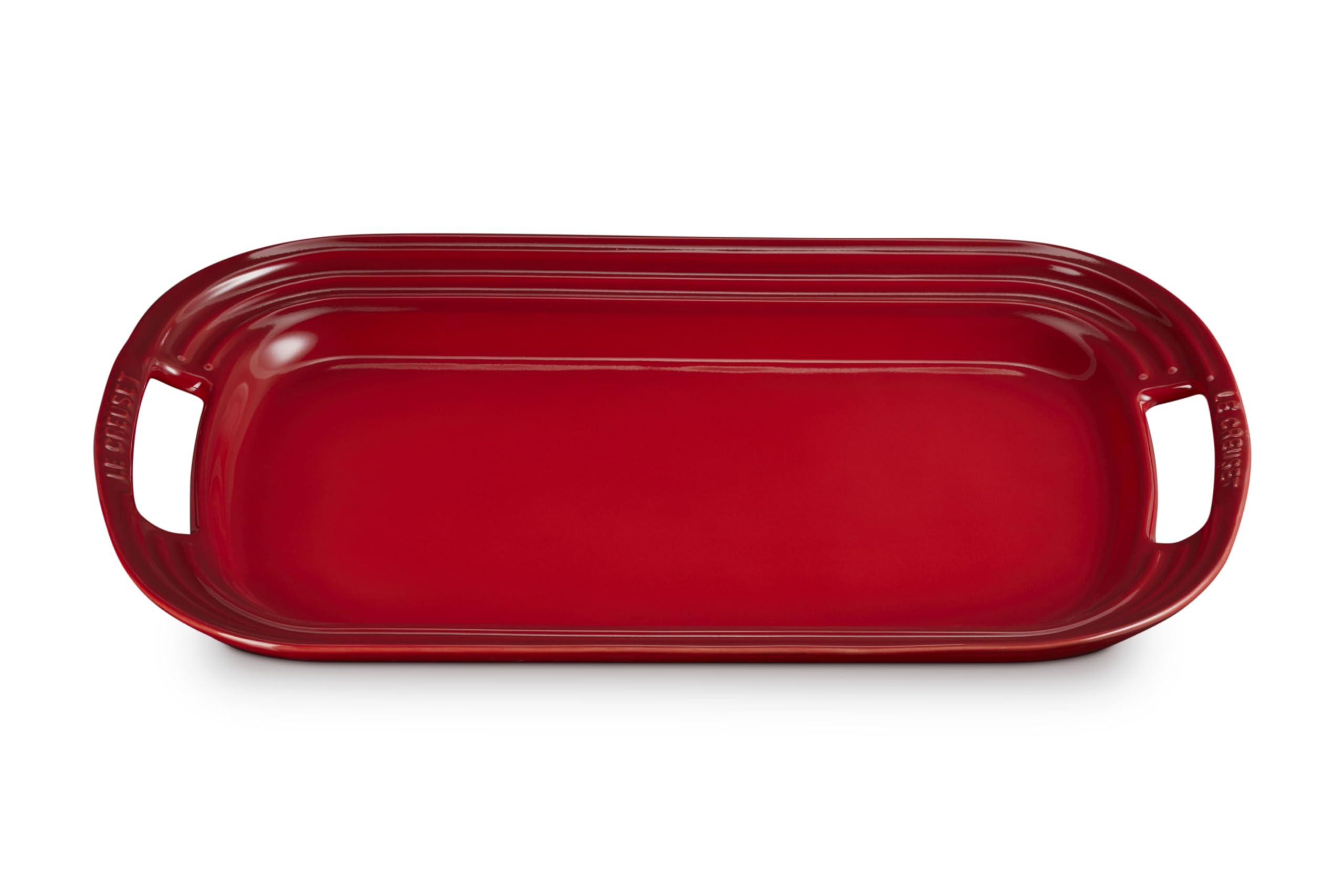
The Le Creuset Stoneware Serving Platter in Cerise is a piece that many home cooks consider adding to their collection. It’s a 16.25-inch oval platter made from dense stoneware, finished in that recognizable bright red glaze. After using it for several weeks, here is a practical look at how it performs in real life.
Real-world usage context – This platter sees most of its action during weekend dinners and casual gatherings. It’s large enough to hold a whole roasted chicken, a dozen breaded fish fillets, or a pile of grilled vegetables. The raised rim helps contain juices and sauces, which is useful when serving saucy dishes like braised short ribs or a tomato-based pasta. It also works well for cold presentations, such as a cheese board with crackers and fruit, or a stack of sandwiches for a lunch spread. The flat surface makes it easy to arrange food neatly, and the oval shape fits comfortably on most dining tables without dominating the space.
Key functional features – The platter is made from high-fired stoneware, which gives it a solid, weighty feel. It handles heat well, going from oven to table without issue, though it’s not designed for stovetop use. It can withstand temperatures up to 500°F, so it works for warming dishes or keeping food hot. The glazed surface is nonporous, which means it resists staining and does not absorb odors. Cleaning is straightforward: it’s dishwasher safe, and dried-on food usually comes off with a quick soak. The Cerise color is consistent and glossy, though it does show minor scratches from metal utensils over time.
Strengths – The platter’s durability stands out. It feels substantial without being uncomfortably heavy, and it has held up well to regular use. The even heat distribution is noticeable when using it for oven-to-table service; hot spots are minimal. The size is practical for most home cooks, fitting a full meal portion without being oversized. The glaze is also chip-resistant for typical daily handling, though it’s not indestructible.
Limitations and trade-offs – The most obvious drawback is the weight. At about 4 pounds, it’s not a platter you want to carry across the kitchen with one hand while balancing other dishes. It’s also prone to thermal shock if moved from a hot oven directly to a cold counter; letting it rest on a trivet or towel helps. The price is high compared to similar stoneware platters from brands like Emile Henry or Crate & Barrel, though the build quality is comparable. The glossy surface can show fingerprints and water spots, requiring a wipe-down before serving if you want it to look pristine. Additionally, the rim, while useful for juices, is not deep enough to hold large amounts of liquid—so it’s not ideal for stews or soups that pool heavily.
Comparison to alternatives – Compared to a generic porcelain platter in the same size range, the Le Creuset feels denser and more resistant to chipping. Porcelain platters are often lighter and less expensive, but they can be more brittle. A wooden serving board is a different category entirely: it’s lighter, won’t break if dropped, and adds a rustic look, but it cannot go in the oven and requires hand-washing with oil treatment. For someone who wants a single piece that transitions from oven to table, the stoneware platter is a better choice than wood. But if you prioritize weight and cost, a porcelain option might suit you fine.
Who it is suitable for – This platter works well for home cooks who host casual dinners or holiday meals and want a durable, oven-safe serving dish that looks presentable. It’s a good fit for those who appreciate the heft and quality of stoneware and are willing to pay for it. It’s also suitable for people who prefer dishwasher-safe items and dislike hand-washing.
Who it is not suitable for – It is not ideal for someone who needs a lightweight, easy-to-maneuver platter, such as for outdoor picnics or buffet lines where you carry multiple dishes. It’s also not the best choice for those on a tight budget, as there are functional alternatives at lower price points. And if you frequently serve very saucy dishes, a platter with deeper sides or a separate gravy boat might be more practical.