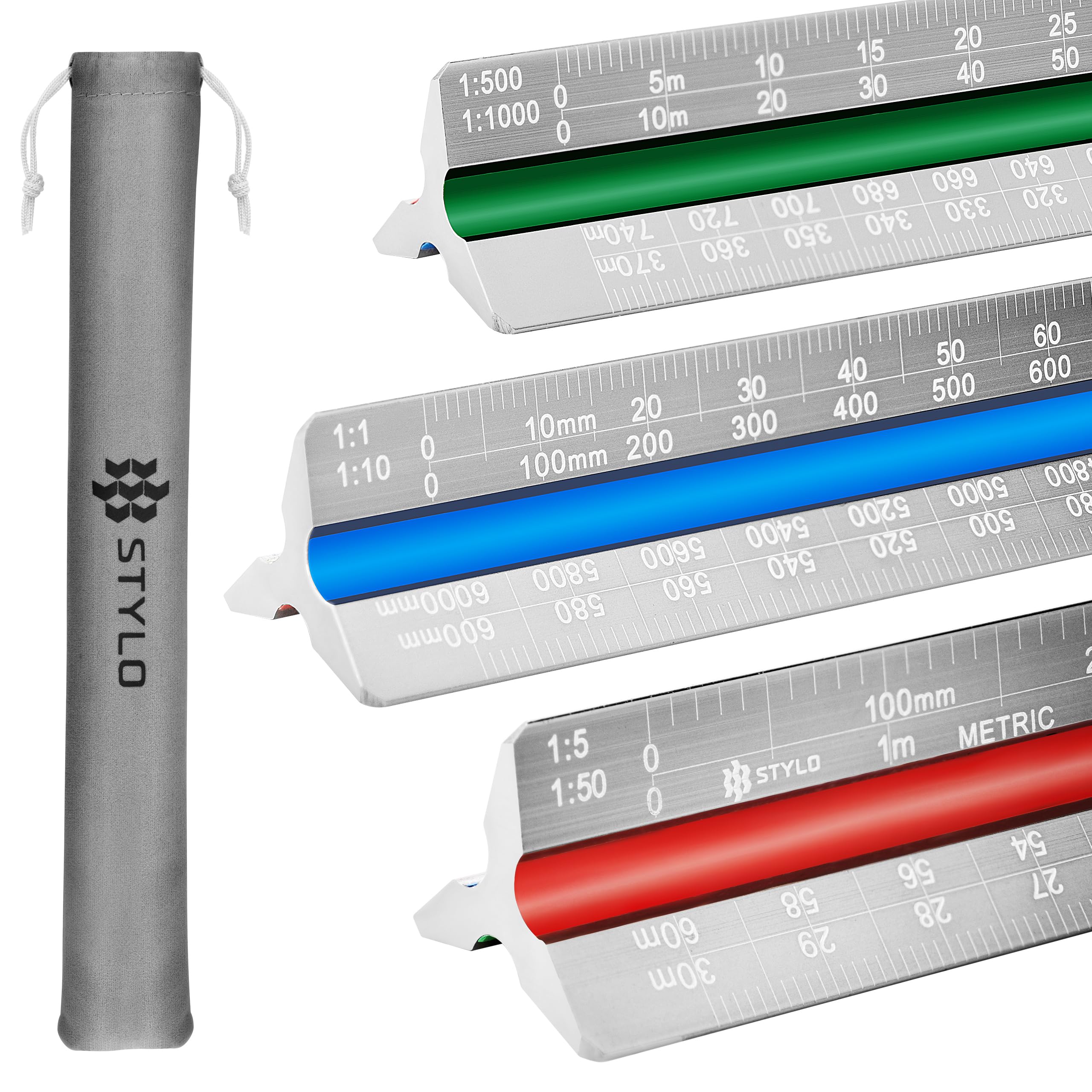
Architectural scale rulers are one of those tools that seem straightforward until you actually need one for a project. The Stylo Architectural Scale Ruler, a 12-inch aluminum model in grey with metric markings, sits in a crowded market of drafting tools. After spending a few weeks using it alongside digital design work and hand sketching, it’s clear that this ruler has a specific place in a designer’s kit—but it also comes with a few caveats worth noting.
The first thing you notice is the weight. At 12 inches, the aluminum body is substantial enough to feel durable without being heavy. It doesn’t flex when you press down to draw a line, which is more than can be said for some plastic alternatives. The anodized grey finish gives it a clean, professional look, and the markings are etched rather than printed. That means they won’t wear off after a few months in a backpack or on a crowded desk. For anyone who has used a cheap ruler where the numbers faded within weeks, this is a genuine improvement.
In actual use, the ruler handles the standard architectural scales you’d expect: 1:100, 1:50, 1:20, and others common in metric drafting. The edges are crisp, and the graduations are legible at a normal working distance. I found it particularly useful for quick proportional checks when sketching floor plans or detail sections. The triangular profile lets you switch between scales by simply rolling the ruler, which is a familiar motion for most architects and students. The edges sit flat against the paper, so you don’t get the wobbly line that sometimes happens with hex-shaped rulers.
That said, there are limitations. The ruler is metric-only, which is fine for many parts of the world, but if you work on projects that require imperial measurements—like renovation work in the US—you’ll need a second ruler. Also, the 12-inch length is a standard size, but it’s not ideal for larger drawings; for A2 or A1 sheets, you’ll find yourself sliding the ruler repeatedly, which can interrupt your flow. A 300mm or 24-inch version would be more practical for studio use, but that’s not what this product offers.
Compared to a plastic scale ruler, the Stylo is clearly a step up in terms of feel and longevity. Plastic rulers are lighter and cheaper, but they often bend under pressure and the markings can be imprecise. The aluminum body here feels like a tool you could keep for years. However, it’s not in the same league as high-end stainless steel rulers from brands like Staedtler or Rotring, which offer even finer graduations and a more premium finish. Those come at a higher price, though, and for most students or professionals just starting out, the Stylo is a reasonable middle ground.
One thing that took some getting used to is the grip. The anodized surface is smooth, and while it doesn’t slip easily, it’s not as tactile as a rubberized coating. If you’re working for long hours, your fingers might get tired from pinching the edges. It’s a minor issue, but one that matters if you’re doing a lot of hand drafting. Additionally, the grey color looks nice, but it can make the etched markings slightly less contrasty compared to a black or white ruler, especially in low light. I found myself angling the ruler toward a lamp to read the numbers clearly.
Who is this ruler for? It’s a solid choice for architecture students, interior designers, or anyone who works primarily in metric and needs a reliable, portable scale ruler for sketching, measuring prints, or quick proportional work. It’s also a good backup tool for professionals who already have a larger drafting setup but want something to keep at their desk or in a bag. On the other hand, if you only work digitally or rarely do manual drawings, you probably don’t need this. And if you’re a professional doing heavy production drafting on large sheets, you’ll likely want a longer ruler or a more specialized tool.
Overall, the Stylo Architectural Scale Ruler does what it sets out to do without fuss. It’s not flashy, and it won’t make you a better drafter, but it’s a dependable instrument that won’t let you down mid-project. The trade-offs—metric-only, short length, smooth finish—are worth weighing against your specific needs. For the price, it’s a fair deal, but don’t expect it to replace a full set of drafting tools. If you’re in the market for a compact, durable scale ruler and you work in metric, this is a reasonable option to consider.