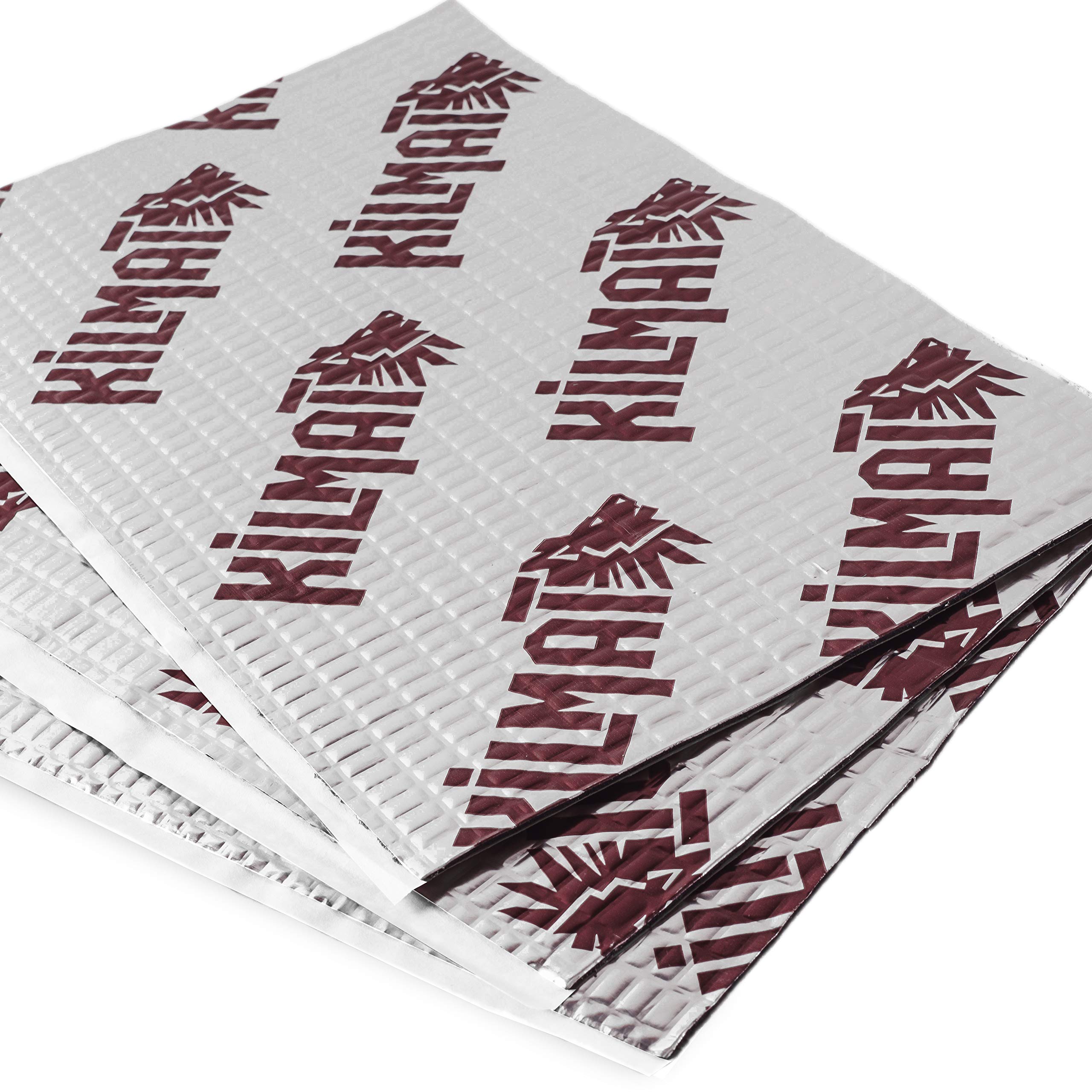
If you’ve spent time in a car with aftermarket audio gear or simply wish your daily driver had less road noise, you’ve probably looked into sound deadening mats. The KILMAT 80 Mil (2 mm) 36 Sqft (3.4 Sqm) Car Sound Deadening Mat is one of those products that aims to address this without breaking the bank. It’s a butyl-based material with an aluminum layer, designed to be applied to metal panels in doors, floors, or trunks.
In real-world use, this mat is primarily applied to flat or slightly curved metal surfaces. You cut it to size, peel off the backing, and press it firmly into place. A roller helps ensure good adhesion, especially on edges. The material is pliable enough to work around contours, though it’s not as flexible as some thinner competitors. Once installed, it adds noticeable mass to panels, reducing vibrations that cause both road noise and panel resonance. For someone installing new speakers, this is a common step to improve midbass response and reduce rattles.
The key functional features here are straightforward: the butyl layer provides damping, the aluminum foil acts as a barrier, and the 80 mil thickness (about 2 mm) gives a decent amount of mass per square foot. The 36 sqft coverage is enough for two car doors or one trunk floor, depending on the vehicle. The adhesive is strong—once it’s on, it’s not coming off easily, which is good for long-term use but means you need to be careful during placement. It also has a moderate smell initially, though it fades after a few days.
However, there are trade-offs. First, this is not a soundproofing material in the sense of blocking airborne noise like engine or tire roar. It dampens vibrations and structure-borne noise, but you won’t get a library-quiet cabin from this alone. For that, you’d need additional mass-loaded vinyl or foam layers. Second, the thickness can be an issue in tight spaces—door panels with limited clearance may not fit properly after application, requiring careful trimming or layering. Third, while the adhesive is strong, it can be tricky to remove if you make a mistake, and it may leave residue on painted surfaces.
Compared to generic peel-and-seal products from hardware stores, KILMAT is a step up. Hardware store materials often use asphalt-based adhesive that can smell or melt in hot climates. KILMAT’s butyl formulation is more heat-resistant and less smelly over time. That said, premium brands like Dynamat or SoundSkins offer similar or slightly better performance per thickness, though at a higher cost. For most DIY installers, KILMAT hits a reasonable middle ground between price and effectiveness.
Who is this product suitable for? It’s a good fit for someone doing a first-time sound deadening project on a budget, especially for improving speaker sound quality or reducing panel rattles. It also works for those who want to quiet a specific area like a trunk or floor without committing to a full vehicle treatment. It is not suitable for professionals seeking maximum noise reduction or for vehicles with extreme heat exposure (like a track car), where higher-temperature-rated materials might be better. Also, if you expect a dramatic drop in road noise, you’ll be disappointed—this is a dampener, not a sound barrier.
In summary, the KILMAT 80 Mil mat does what it claims: it adds mass to panels and reduces vibration. It’s not a miracle product, and it has limitations in terms of application ease and overall noise reduction scope. But for its price point and coverage, it’s a practical choice for car audio enthusiasts or DIYers looking to make a noticeable improvement in cabin comfort. Just go in with realistic expectations and take your time during installation.