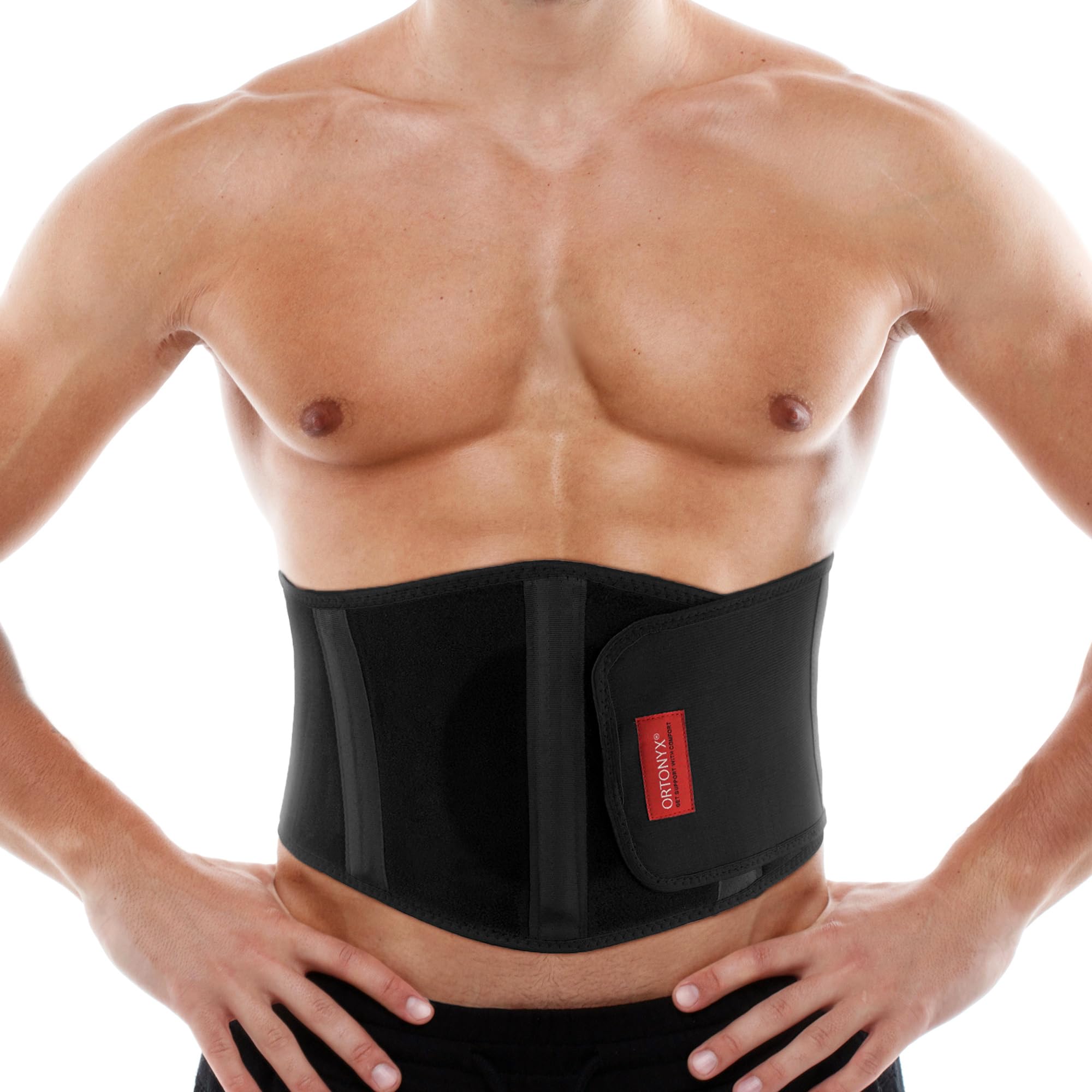
The ORTONYX Ergonomic Umbilical Hernia Belt is a specialized abdominal support binder designed for individuals dealing with umbilical, ventral, epigastric, incisional, or belly button hernias. Marketed for both men and women, this brace aims to provide targeted compression and support, particularly after surgery or during daily activities. After testing the OX353-L/XXL size over several weeks, here’s a realistic look at how it performs in real-world use.
This belt is worn around the waist, with a removable compression pad that sits directly over the hernia site. The pad is firm but flexible, and it applies steady, localized pressure to help keep the hernia reduced—meaning it pushes the protruding tissue back in place. In practice, this works reasonably well for small to moderate hernias, especially when you’re sitting, standing, or walking. The belt stays in place during light movement, though it can shift slightly during more active tasks like bending or twisting. The design includes a broad elastic band that wraps around the torso, secured with hook-and-loop closures (Velcro-style). The material is breathable and moisture-wicking, which helps during longer wear sessions, though it’s not completely invisible under thin clothing—it’s best worn under looser shirts or over a base layer.
Key functional features include the adjustable straps, which allow you to customize the tension. The belt has two side pull tabs that let you tighten or loosen the fit without removing the entire brace. This is useful if you need to adjust pressure after eating or during the day. The compression pad can be repositioned or removed entirely, which adds versatility. Some users might find the pad too firm for sensitive skin, but it can be padded with a cloth if needed. The belt is also machine washable (air dry recommended), which is a practical advantage for daily use.
However, there are notable limitations. The sizing can be tricky: the L/XXL fits waist sizes up to 54 inches, but the belt’s length might be too long for shorter torsos, causing the edges to dig in or roll up. The adhesive on the pad can lose stickiness after a few washes, requiring replacement or extra securing. Also, the belt provides strong support but can feel restrictive when sitting for long periods—it tends to bunch at the lower back. For more active users, it may not stay perfectly aligned during exercise or heavy lifting, so it’s better suited for sedentary to moderate activity levels.
Compared to a generic elastic abdominal binder (like those sold in drugstores), the ORTONYX offers more targeted pressure with its pad, which is a clear advantage for hernia-specific needs. Generic binders often provide uniform compression but lack the localized support that some hernia patients require. On the flip side, generic binders are usually cheaper and simpler to adjust, with fewer parts to maintain. If your hernia is very large or you need heavy-duty support for intense physical work, a custom-fitted medical brace might be a better option.
This belt is suitable for people recovering from hernia surgery who need gentle, consistent compression to reduce swelling and support the healing tissue. It also works for those with reducible hernias who want to manage symptoms during daily routines. It is less suitable for individuals with very large hernias that cannot be manually reduced, those with skin sensitivities to adhesive or elastic, or anyone requiring rigid immobilization. Athletes or workers doing heavy lifting may find it insufficient for high-impact scenarios.
Overall, the ORTONYX belt is a functional tool for hernia management, but it’s not a cure-all. It offers decent support and adjustability, with some quirks in fit and durability. If you’re looking for a mid-range option with targeted compression, it’s worth considering, but manage expectations around long-term comfort and activity level.